

Oman Strengthens Global Trade Position Through Advanced Ports and Digital Logistics Transformation
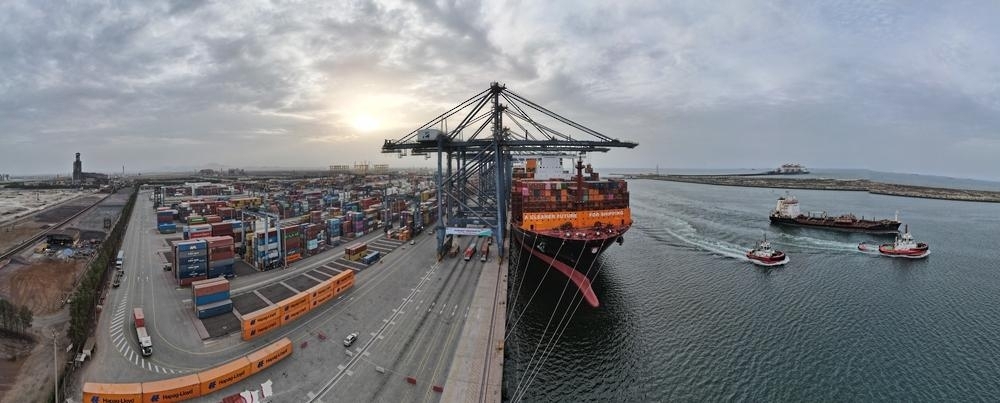
Development of Strategic Ports
Oman has witnessed a significant boost in the efficiency of international trade by enhancing and establishing itself as a competitive logistics hub in region.
MUSCAT, OMAN, February 13, 2026 /EINPresswire.com/ -- Over the past five years, Oman has witnessed significant boost on the efficiency of international trade by enhancing its logistics sector, establishing itself as a competitive logistics hub in the region. This has been achieved through digital customs modernization and the strategic development of its key ports: Sohar, Duqm, and Salalah. These efforts have led to improved logistics performance, increased cargo volumes, and diversified trade partnerships.Several initiatives have been introduced to improve the investment environment, including:
• Pre-arrival clearance initiative to finalize procedures before shipment arrival
• Remote clearance initiative to ensure smooth cargo flow
• Post-clearance audit initiative to accelerate procedures while maintaining compliance
• Electronic customs valuation system and Electronic Air Waybill initiative
• Secure Customs Corridor initiative, which connects ports with free zones and investment warehouses, streamlining the movement of goods between customs zones
These initiatives form part of Oman’s strategic direction towards digital transformation and trade facilitation, reinforcing its position as a competitive logistics hub regionally and internationally.
The Directorate General of Customs has also activated the International Road Transport System (TIR), which serves as a passport for transit goods. The establishment of the Customs–Private Sector Partnership Council aims to deepen cooperation and integration on various customs-related matters.
The Directorate continues to strengthen its digital ecosystem in coordination with port and airport operators and links shipping agents and maritime agents with the Bayan system through the Jisr initiative.
Digitalisation has significantly transformed trade in Oman, with e-commerce expanding rapidly due to increased internet penetration and growing consumer adoption of online services. The major contributing factors that accelerated digital transformation include the pandemic’s impact on boosting online shopping, the increase in active internet users to over 5 million, and internet penetration surpassing 90% of the population. All these have laid a strong foundation for both local and international e-commerce growth.
Despite strong progress, challenges remain, including infrastructure development, delivery timelines, shipping costs, and the need to modernize customs regulations to support evolving business models. Developing a national e-commerce platform and supportive policies is key to sustaining future growth. Oman’s progress between 2020 and 2025 serves as a model in how integrated trade and logistics reforms can drive national economic efficiency. By modernizing customs, activating strategic trade agreements, and expanding maritime infrastructure, the Sultanate has successfully closed the gap with leading regional hubs. While the journey toward full economic diversification continues, Oman’s trade infrastructure is now a powerful engine capable of accelerating non-oil exports and serving as a primary logistics gateway for neighboring markets.
Development of Strategic Ports:
In parallel with digital innovations, Oman has been investing heavily in the development of its strategic ports. Oman’s three primary ports—Sohar, Duqm, and Salalah—each play a critical role in enhancing the Sultanate’s trade capacity:
• Sohar Port serves as a major industrial and commercial gateway
• Duqm Port is poised to become a hub for heavy industries and regional trade
• Salalah Port is a key player in container handling and a vital transit hub connecting Asia, Europe, and Africa
Salalah port underwent a major expansion programme completed in early 2025, which increased its annual container handling capacity from about 4.5 million TEUs to approximately 6 million TEUs (some sources indicate 6.5 million TEUs)," according to official announcements.
Through strategic investments in ports, digital customs systems, and logistics infrastructure, Oman is strengthening its position as a reliable global trade hub while supporting sustainable economic growth,” a Ministry spokesperson said.
Despite challenges such as global supply chain disruptions and regional competition, Oman’s ports continue to attract foreign investment, contributing to the growth of the Sultanate’s non-oil sectors.
Aligned with Oman Vision 2040, the Sultanate remains committed to strengthening integration between ports, customs, and logistics sectors, positioning itself as a leading regional trade and logistics hub while supporting long-term economic diversification.
About Ministry of Commerce, Industry and Investment Promotion:
The Ministry of Commerce, Industry and Investment Promotion (MoCIIP) plays a key role in strengthening a diversified, sustainable, and competitive economy in the Sultanate of Oman. By collaborating with local and international stakeholders, the Ministry facilitates business establishment, supports private sector development, and actively promotes foreign direct investment (FDI) to drive economic growth.
MoCIIP
Ministry of Commerce, Industry and Investment Promotion
email us here
Legal Disclaimer:
EIN Presswire provides this news content "as is" without warranty of any kind. We do not accept any responsibility or liability for the accuracy, content, images, videos, licenses, completeness, legality, or reliability of the information contained in this article. If you have any complaints or copyright issues related to this article, kindly contact the author above.
